
VisionVision
Toward a society where all clothing
is returned as a resource.
End of waste,
beginning of renewal.

MissionOur Mission
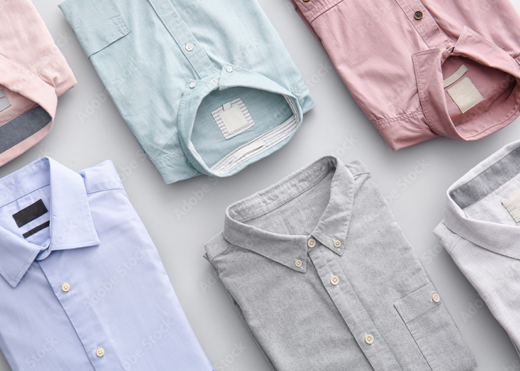
- Safely carbonize clothing including synthetic fibers without sorting, and regenerate them as soil amendments and recycled resources.
- Provide an exit strategy for clothing that does not rely on incineration or landfill, implementing CO₂ reduction and a sustainable circular model.
- Collaborate with diverse industries to drive the social shift from "discarding" to "returning."
Core ValueOur Core Values
-
CO₂ Reduction
We reduce CO₂ emissions by approximately 80% compared to standard incineration disposal.
-
Returning to Soil Through Proprietary Technology
Our unique carbonization technology regenerates clothing fibers into soil conditioners.
-
Achieving Decarbonization
We provide clear solutions to the challenges faced by sustainability managers, driving decarbonized business with proven services.
ComparisonTextile Recycling Methods
Achieving 100% resource recovery. Reaching a level unattainable by other methods.
While material and chemical cycles require material separation and result in moderate to high levels of CO2 emissions, CIRCULAR CARBONs carbonization technology processes clothing, including blended materials and accessories, in a single batch without separation, achieving approximately 80% CO2 reduction compared to incineration. With a 100% recycling rate, it can be used in a variety of applications such as soil conditioners, building materials, and adsorbents, and significantly surpasses other methods in terms of alignment with SDGs 12 and 13.
| CIRCULAR CARBON | Material Cycle | Chemical Cycle | |
|---|---|---|---|
| Basic Principle |
No sorting required (100% natural fiber items must be sorted). |
Sorting required | Sorting required |
| Compatible Materials |
Blended fabrics & accessories included— "Nearly all materials" processed at once |
Sorting required (process differs for cotton & synthetics) |
Mainly synthetics (especially polyester) |
| Quality |
◯ High-quality carbonized material used as functional resource |
△ Tends to degrade from original material |
◯ Can be regenerated to virgin equivalent level |
| CO₂ Emissions |
◯ Industry-leading low (approx. 80% reduction vs. incineration) |
× Medium–high (energy for shredding & re-spinning) |
× Medium–high (chemical process load) |
| Need for Sorting |
◯ Not required (accessories auto-removed) |
× Required |
× Mostly required |
| Cost |
△ High-quality carbonized material used as functional resource |
◯ Relatively inexpensive |
× High (equipment & processing costs) |
| Recycling Rate |
◯ 100% (entire volume recycled as carbonized material) |
× Tens of percent level |
△ High but effectively lower due to sorting challenges |
| ↓ | ↓ | ↓ | |
| End Products | Soil conditioners, building materials, adsorbents, carbon fiber, molded products, etc. | Reused fiber, re-spun yarn, wiping cloths, etc. | Recycled polymers / monomers |
| Social Value | Highly aligned with SDGs 12/13 as incineration-free & carbon-fixing solution | Closer to reuse | Valued as circular material development |
| Suitable Industries | Construction, manufacturing, and textile industries | Apparel, cotton processing | Chemical companies, major textile firms |
ProcessRecycling Process
CIRCULAR CARBON Recycling Process
The materials are crushed and pulverized while removing accessories such as zippers and buttons, and then, using our unique carbonization equipment, harmful substances and microfibers contained in the synthetic fibers are thermally decomposed into safe carbonized materials.
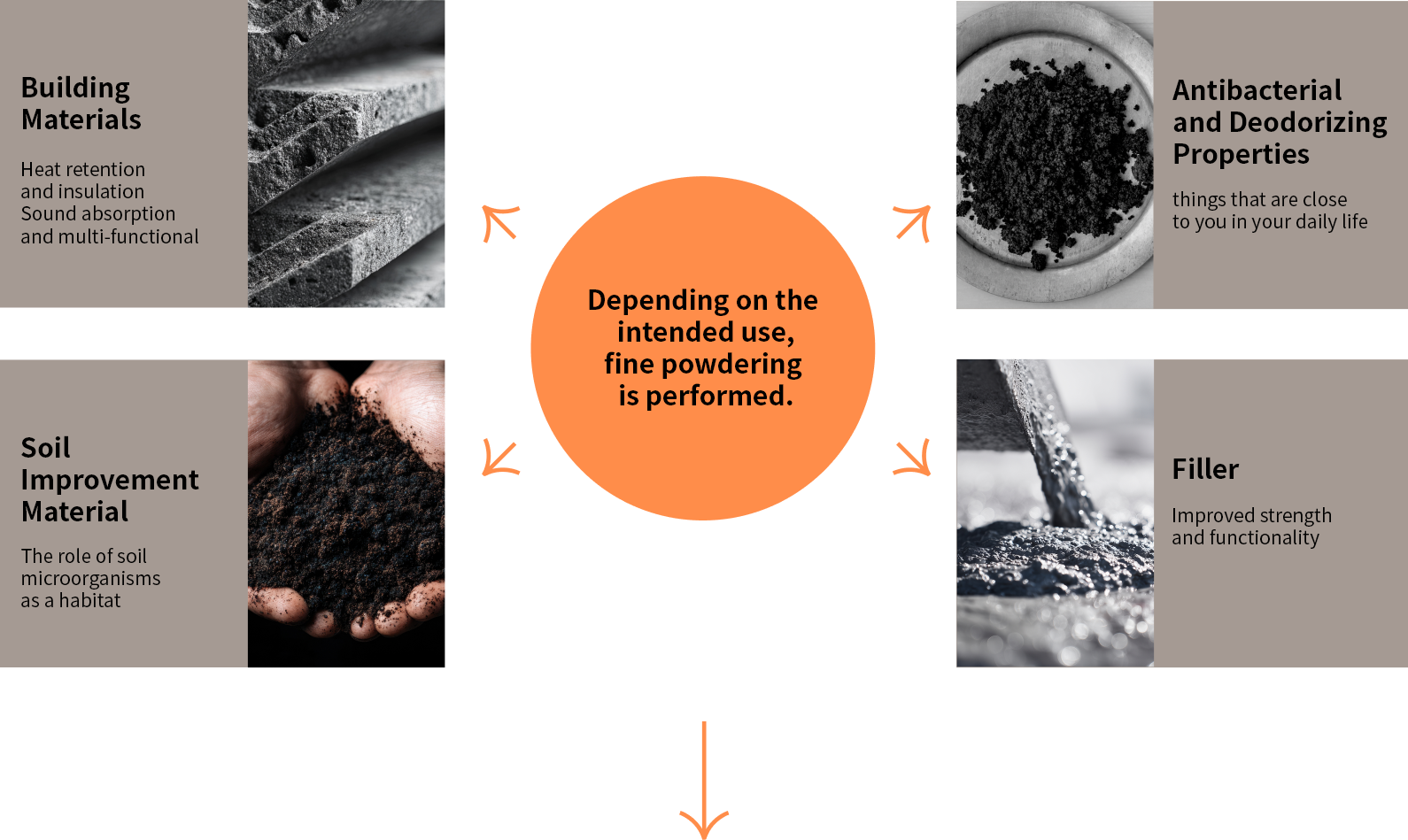
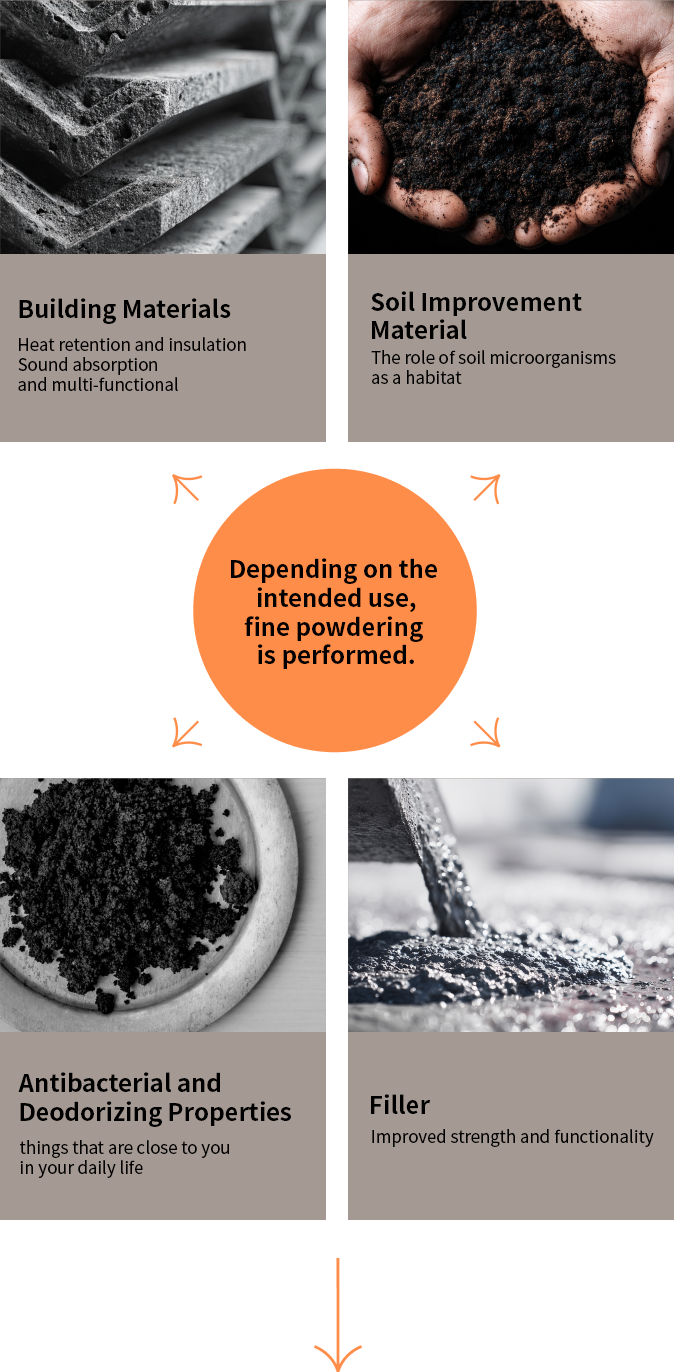
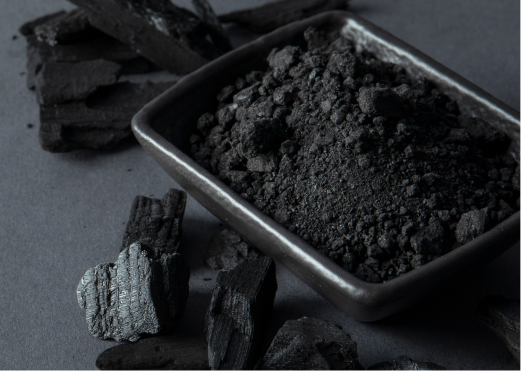
The resulting carbonized material is transformed into a valuable recycled resource that can be used in a variety of applications, including soil conditioners, building materials, deodorizers, and molded products.
"Infinite possibilities"
We turn ideas into reality.
SolutionCreating New Value
Clothing reborn as abundant harvest
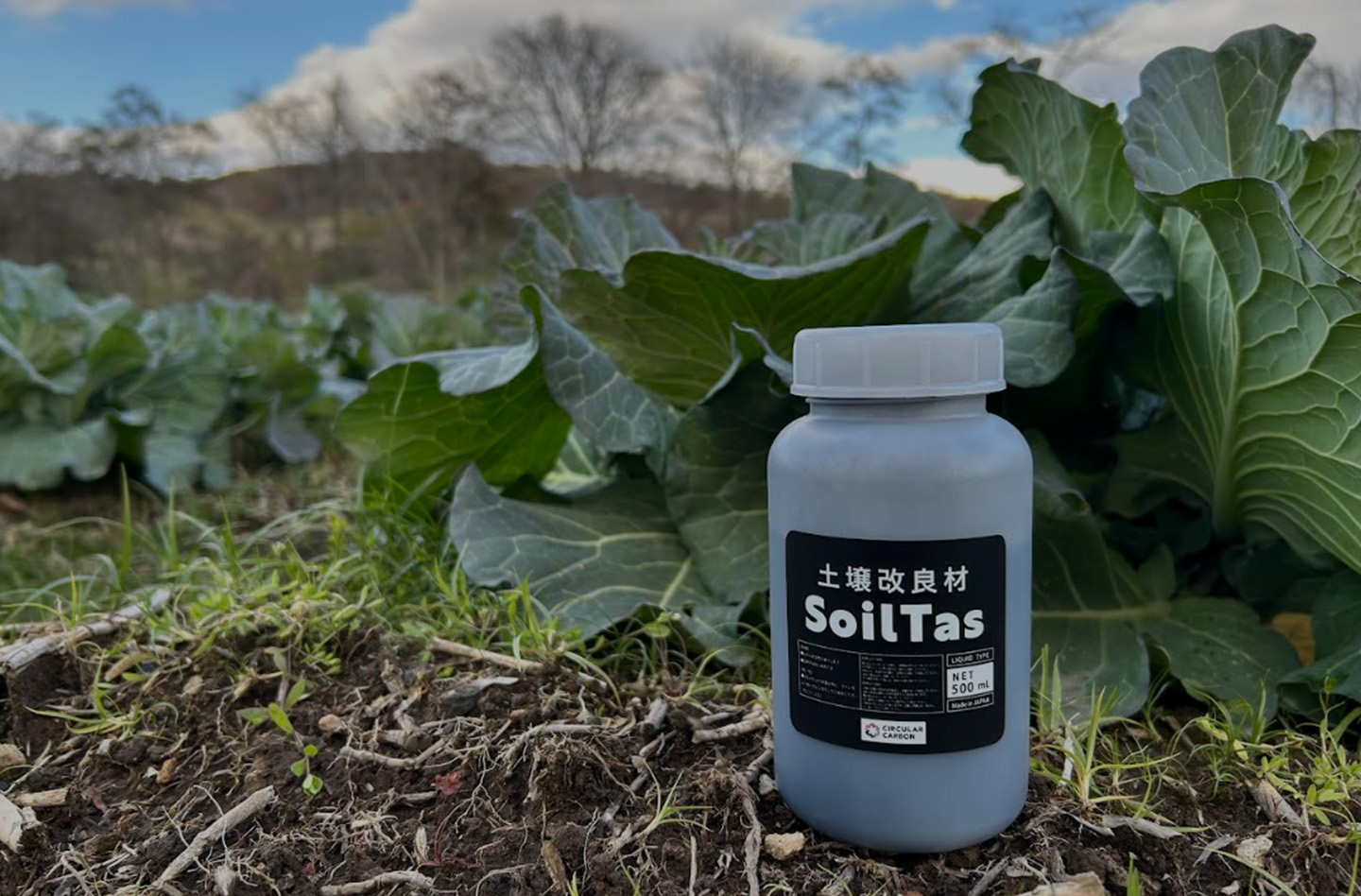
Circular Carbons unique technology recycles collected clothing into fibers, which are then used in agriculture as soil conditioners. This soil conditioner allows vegetables to thrive in soil with ideal growing conditions, enabling sustainable agriculture with minimal environmental impact.
Not waste, but a valuable resource.
Clothing returns to the soil, nurturing new life.
This is the true circular economy we propose.
FIBER
POWER
FARM
MATERIALS